Commissioners Connect: Advancing Strategic Dialogue on Revenue Mobilisation in a Borderless Economy
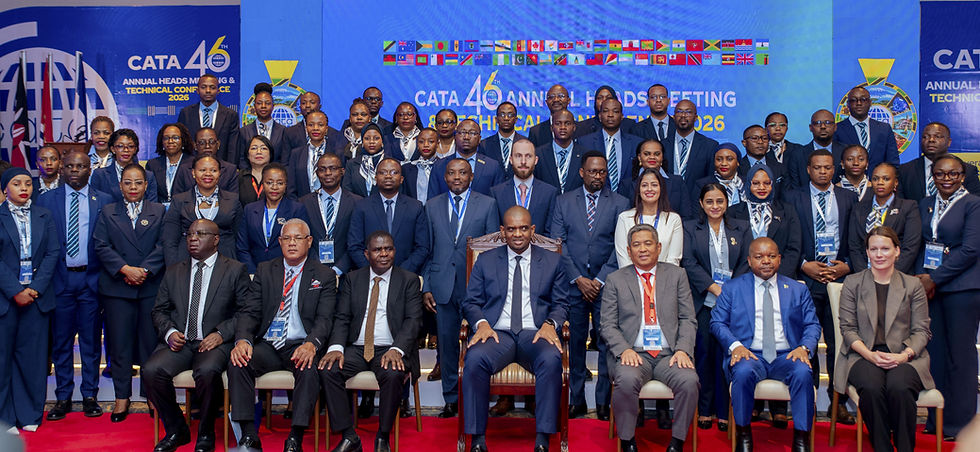
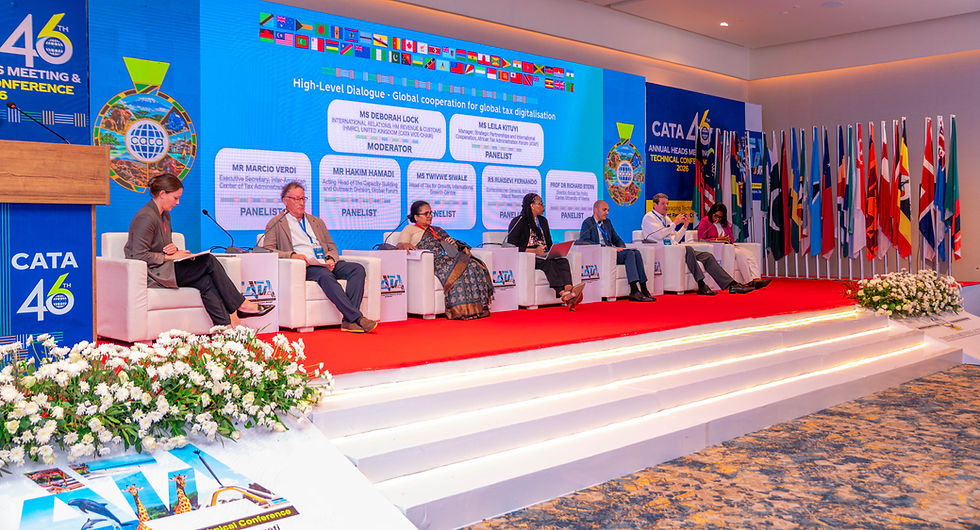
The Commonwealth Association of Tax Administrators (CATA) convened a Commissioners Connect session on 24 June 2026, bringing together Commissioners General and Heads of Tax Administration for a closed, high-level discussion on the theme:

“Mobilising Revenue and Safeguarding the Tax Base in a Borderless Economy: Strategic Levers for Commissioners General.”

Designed as a peer-to-peer forum, the session provided an opportunity for candid exchange among leaders on the evolving global tax landscape and the strategic responses required at the national level.
Diverse Stages of Readiness and Strategic Positioning

Discussions underscored that jurisdictions are at different stages of adoption and implementation of international tax standards. While some administrations are advancing implementation, others are still navigating foundational readiness challenges.
Participants reflected on the strategic implications of global developments, noting that for smaller jurisdictions, engagement with international standards often requires balancing competing domestic priorities within constrained resource environments.
At the same time, several smaller and city-state jurisdictions highlighted that implementation can be viewed not only as a compliance requirement, but also as a strategic tool to enhance consistency, certainty and transparency, with potential positive spillover effects for investment and economic activity.
Implementation Challenges and Capacity Constraints

A key theme emerging from the discussion was the complexity of implementation, particularly for smaller or less-resourced administrations. Commissioners noted the challenge of navigating speed versus quality, as jurisdictions are often expected to meet global timelines comparable to larger administrations with significantly greater resources.
Capacity constraints were a recurring concern, including:

Limited human and financial resources to support both international commitments and domestic priorities
Ageing workforce profiles in some administrations
The need to strengthen mid-level and emerging leadership capacity
Participants stressed the importance of succession planning and talent retention, highlighting that sustaining institutional knowledge and building future leadership pipelines is critical to long-term effectiveness.
Data, Analytics and the Role of Technology

With increased access to data through global reporting frameworks, Commissioners emphasised that the key challenge is not only access to information, but the ability to translate data into improved compliance and revenue outcomes.
This has heightened the importance of:
Data analytics capabilities
Investments in systems and tools to support evidence-based decision-making
Developing the skills required to fully leverage available data

The discussion also touched on the growing relevance of emerging technologies, including artificial intelligence, and the potential for these tools to support more effective tax administration. In this regard, Commissioners noted the importance of targeted support and capacity building, particularly for smaller jurisdictions.
The Imperative of Collaboration and Shared Solutions
Across all discussion segments, there was a strong convergence of views on the need for greater collaboration among jurisdictions.
Participants highlighted opportunities for:
Regional cooperation and knowledge sharing
Development of shared tools, approaches and expertise
Strengthened support from the CATA Secretariat in facilitating practical solutions
The discussion reinforced that many of the challenges faced are common across jurisdictions, and that collective approaches can help address capacity gaps more effectively.

Looking Ahead
The session concluded with reflections on the importance of continued dialogue at leadership level and the role of CATA in supporting its members to navigate an increasingly complex global tax environment.
Commissioners Connect continues to serve as a valuable platform for fostering strategic exchange, peer learning, and collective action, ensuring that tax administrations are better positioned to mobilise revenue and safeguard their tax bases in a rapidly evolving world.